


Why NIAUX 200 Disc Blades Are the Premium Choice for Modern Farming
Not all discs are created equal. A single disc can really make the difference in the field.
In modern agriculture, where every hectare matters, the quality of your disc blades can make or break your season. Whether you’re cutting through residue, preparing the perfect seedbed, or trying to reduce downtime, the disc you choose directly impacts your efficiency, your yield, and your costs.
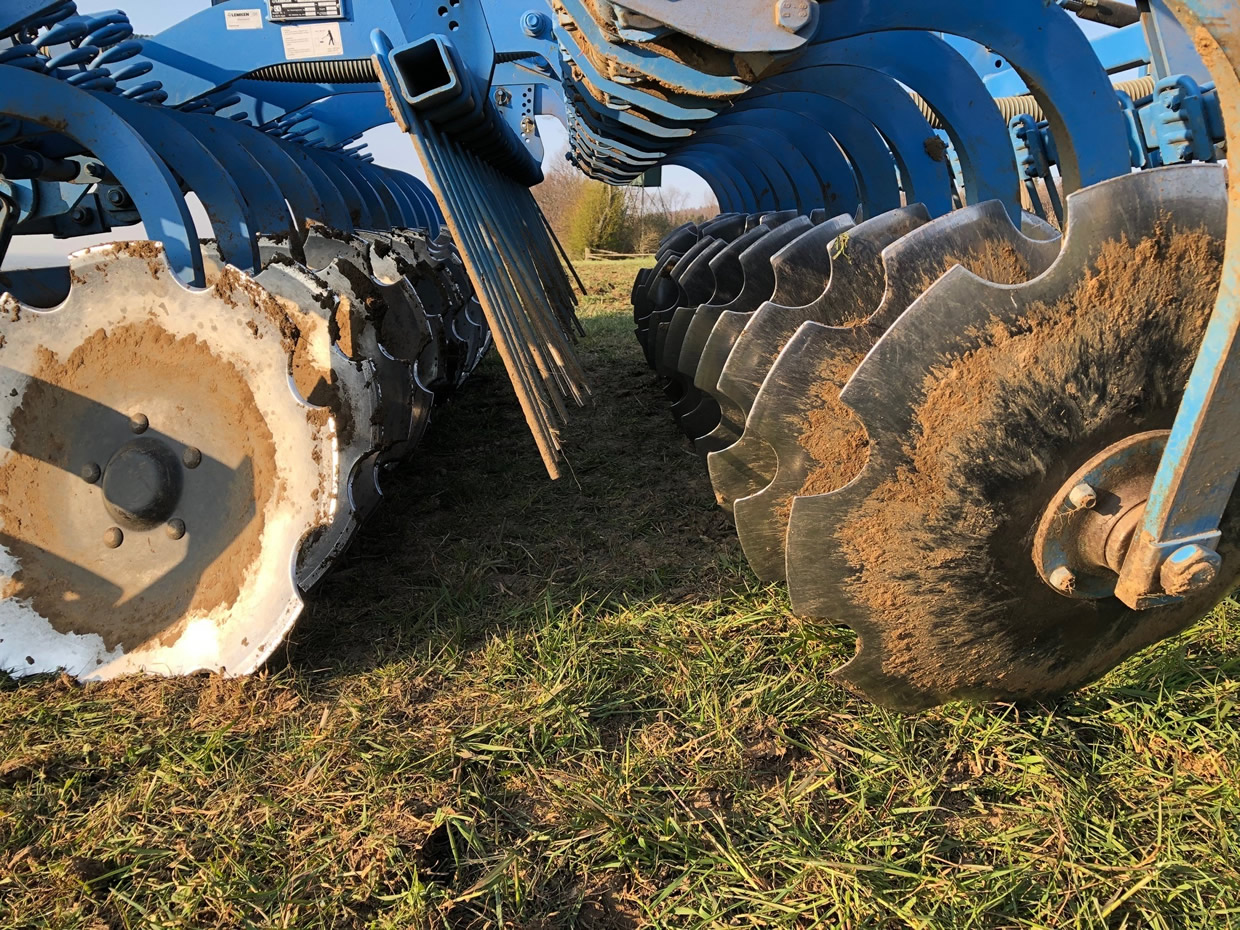
So how do you choose the right disc, and what makes a good disc?
Let’s dive into the world of disc blade qualities — and uncover what separates low-cost, mid-range, and premium solutions.
A good disc isn’t just round steel. It’s a highly engineered part that must combine:
- Wear resistance – to handle abrasion and friction over long hours
- Shock absorption – to resist breakage when hitting stones or stumps
- Sharpness retention – to keep cutting efficiency without dulling quickly
- Perfect geometry – for precise depth, better slicing, and smoother traction
To achieve this balance, manufacturers must combine the right steel quality with expert heat treatment — a delicate mix of metallurgy, design, and durability engineering.
There are three grades of disc blade quality on the market:
1. Low-Cost Discs
In today’s market, the first and most basic grade of disc blade quality is represented by low-cost discs, typically made in China, India, or through small local manufacturing facilities.
These discs are generally made from 65Mn carbon steel, a material whose composition and performance standards date back to the 1960s and 1970s and no longer meet the demands of modern agriculture:
- Steel: 65Mn carbon steel (the same used in the 60s–70s)
- Heat Treatment: Basic oil quenching
- Hardness: Max 44 HRC
- Very limited wear resistance
- High risk of breakage
- No self-sharpening
- Highest cost per hectare (due to frequent replacements)
As a consequence, there is also a higher risk of breakage under stress, particularly at higher working speeds or in abrasive soils. These discs do not offer any self-sharpening properties, so cutting efficiency steadily declines over time. Although their purchase price is attractive, their short lifespan makes them the most expensive option per hectare in real operating conditions.
They may be acceptable for occasional or light use, but they are clearly unsuited to the requirements of modern, high-speed farming operations.
2. Mid-Range Discs
The second category is mid-range disc blades, which are generally manufactured in Europe, North or South America, and Turkey, and represent a step up in quality compared to low-cost alternatives.
- Steel: 30MnB5 boron steel
- Heat Treatment: Polymer quenching or water quenching + tempering
- Hardness: Up to 50 HRC
- Moderate wear resistance
- Acceptable shock resistance
- Still uniform hardness = risk of breakage at the center
- No self-sharpening edge
- High cost per hectare
At this level, wear resistance is moderate and shock resistance is generally acceptable for standard farming conditions. However, the hardness remains uniform across the entire disc, including the center, which creates a structural weakness and increases the risk of breakage under high stress or impact. In addition, these discs do not feature any self-sharpening capability, so cutting efficiency still degrades progressively with use.
Overall, they offer a noticeable improvement but still suffer from inherent technical limitations, as pushing hardness beyond 50 HRC would significantly increase the risk of cracks and premature failure.
3. Premium Discs — NIAUX 200
Quality made in France by FORGES DE NIAUX!
The third and highest category is represented by premium disc blades, exemplified by NIAUX 200, which are manufactured in France by Forges de Niaux and set the benchmark for performance and durability in modern agriculture. These discs are produced from a special grade of boron steel with a higher carbon content, specifically engineered to withstand extreme working conditions:
- Steel: Special grade boron steel with higher carbon content
- Heat Treatment: Advanced water quenching + tempering
- Hardness: Up to 60 HRC on the working zone
- Best wear resistance on the market
- Maximum flexural strength (center stays <50 HRC)
- Self-sharpening edge thanks to full-depth hardening
- Lowest cost per hectare
Designed specifically for modern, high-speed, high-power farming, NIAUX 200 is the only patented disc combining multiple hardness zones:
- Gradual transition zone
- Soft and flexible center
- Ultra-hard working edge between 55 and 60 HRC
The result? A disc that wears slower, breaks less, and stays sharp longer.
Although positioned as a premium product, its exceptional longevity results in the lowest cost per hectare, minimizing replacements and reducing downtime. The result is a disc that wears more slowly, breaks less frequently, cuts better and stays sharp for significantly longer, delivering consistent performance in the most demanding agricultural environments.
Focus on disc blades heat treatment.
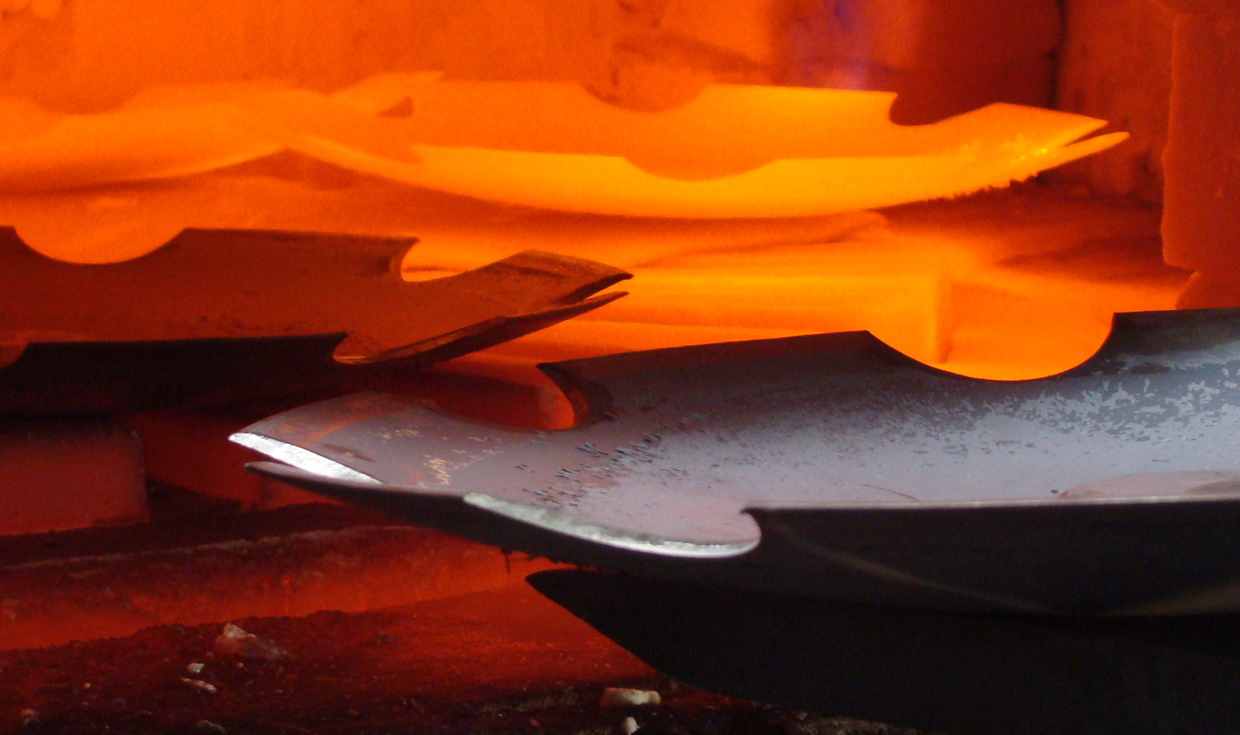
Even the best steel is nothing without proper heat treatment. Here’s why:
| Process | Pros | Cons |
|---|---|---|
| Oil/Polymer Quenching (basic) | Low cost | Lower performance, weaker steel grain |
| Water Quenching + Tempering | Best steel structure, higher durability | Higher cost, requires more expertise |
Some mid-range manufacturers already apply water quenching followed by tempering to improve mechanical properties — but only NIAUX 200 combines this method with a patented process of differentiated hardness, pushing wear resistance and flexibility to a whole new level.
NIAUX 200 vs Standard Discs: Performance and Cost Comparison
| Feature | Low cost | Mid range | Niaux200 (Premium) |
|---|---|---|---|
| Production Regions |
China, India | Europe, Americas | France |
| Steel | 65Mn carbon steel | 30MnB5 boron steel | Special boron steel |
| Heat Treatment |
Oil quenching | Polymer / Water quenching & tempering |
Water quenching & tempering |
| Max. Hardness |
44 HRC | 50 HRC | Up to 60 HRC (edge) |
| Wear Resistance |
Very low |
Moderate |
Best in market |
| Flexural Strength |
Poor |
Acceptable |
Excellent |
| Self- sharpening |
No |
No |
Yes |
| Cost per hectare |
Highest |
High |
Lowest |
In conclusion, choose smart disc blades, work better!
Now, you know that in today’s agriculture, your disc blade isn’t just a tool — it’s a strategic choice. And as this comparison shows, investing in premium quality like NIAUX 200 isn’t just about durability. It’s about cutting costs, boosting productivity, and working smarter.
Don’t settle for replacements. Choose a performance that lasts. Contact us to learn more about our products at contact@mecaparts-agri.com